Loading... Please wait...
 USD
USD


)
Clinical Applications of Integrated FES Therapy Systems Course - Hosted by: Froedtert Bluemound Rehabilitation Hospital, November 6-7, 2026

Product Description
This 2-day course will be hosted by Froedtert Bluemound Rehabilitation Hospital 10000 W. Bluemound Road, Wauwatosa, WI 53226. This course runs from 9am-5pm CST on November 6-7, 2026. The intended audience are current users of Restorative Therapies iFES Therapy Systems disciplines including OT, COTA, PT, PTA, EP, etc. The course is currently approved for 15 CEU contact hours through the Maryland Board of Occupational Therapy Practice and the Maryland Board of Physical Therapy Examiners.
The course includes didactic and practical application learning opportunities. All participants are required to sign in & out each day and pass an assessment test of the knowledge gained during the course in order to receive completion certification. Class size is limited to maintain optimal learning/teaching opportunities during practical sessions. Course content will cover the following:
- Integrate FES Therapy Systems review
- Fundamentals of Electrical Stimulation and the physiological effects
- Physiological muscle recruitment vs. electrical evoked muscle recruitment
- Power, METs, & functional outcomes
- Xcite2: Activity based application of electrical stimulation for task specific training
- RTILink Operations
- Therapy defaults & clinical rationale for modifications
- Session and progress graph analysis
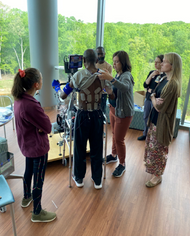
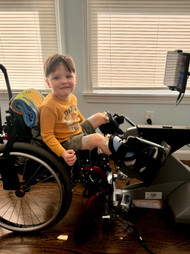
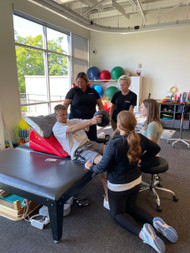
- Hands- on clinical applications of Integrated FES Systems including RT300-Arm, leg and core system and Xcite2 Clinical Station with patient volunteers
Course objectives
- At the conclusion of the course, the participant will be able to:
- Demonstrate understanding of physiologically evoked muscle response vs. external electrical stimulation evoked muscle responses
- Demonstrated proficiency in optimizing therapy settings and stimulation parameters based upon patient-specific presentation
- Demonstrate proficiency in clinical application of FES integrated systems (RT300 and Xcite2) across a variety of neurological patient presentations and diagnoses to optimize rehabilitative outcomes.